How Lorraine Is Using AI to Reshape Medical Learning
Lorraine is building AI into the core of how South African doctors learn, practise, and prepare—focusing on clinical relevance, local guidelines, and tools that sharpen reasoning rather than replace it.
- Written by
- Lorraine Team
- Role
- Editorial
- Published
- 18 February 2026
- Reading time
- 7 min read

Artificial intelligence is changing every industry. Medicine is no exception. At Lorraine, we are not chasing trends. We are building AI into the core of how doctors learn, practise, and prepare, with a singular focus on clinical relevance and South African context.
Here is a glimpse at what we are working on and where we are heading.
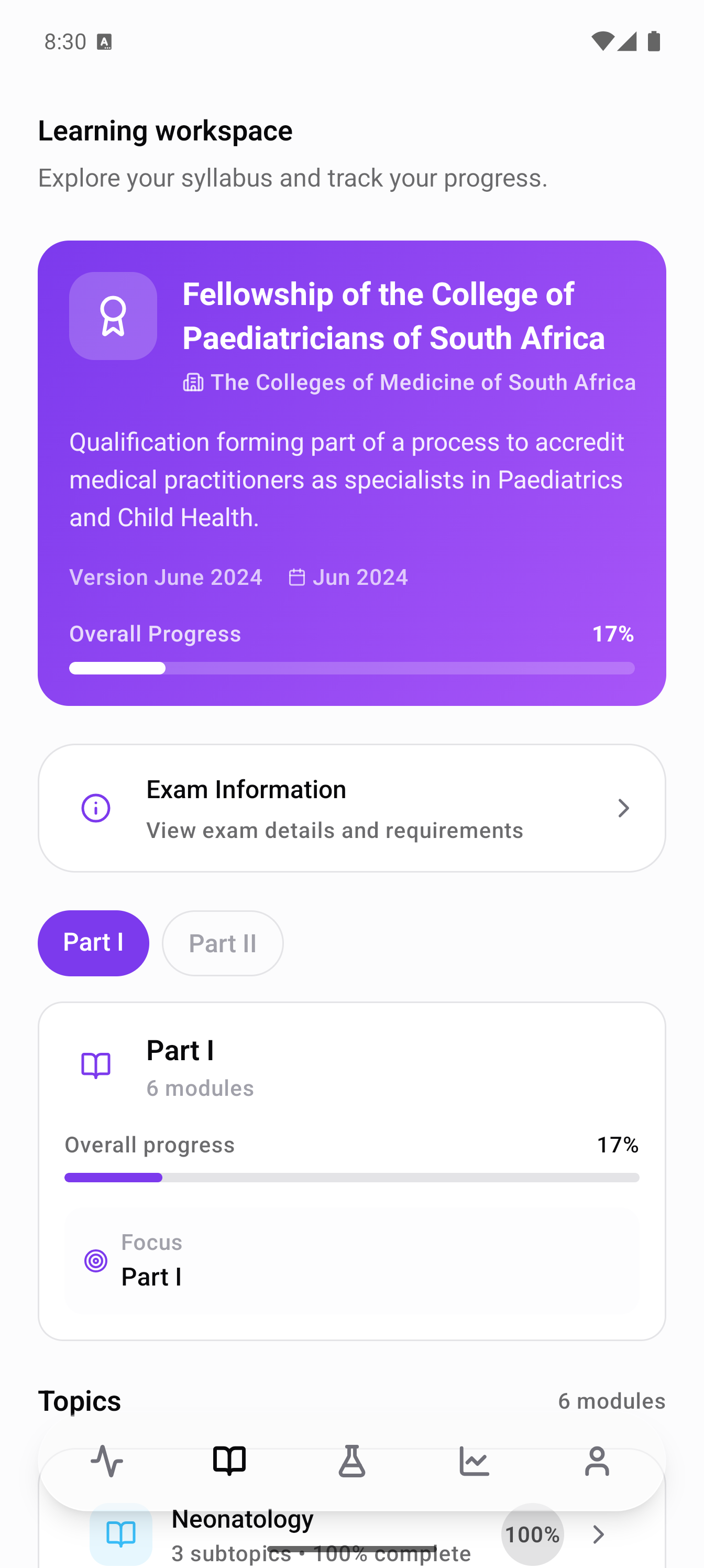
AI that understands medicine
Generic AI tools can summarise an article or answer a trivia question. But medicine demands more. It demands reasoning, context, and precision.
The AI we are building is designed specifically for medical education. It understands clinical workflows, speaks the language of South African guidelines, and is trained to support learning rather than replace it.
We are not interested in building a chatbot that gives generic health advice. We are building tools that help doctors think more clearly under pressure.
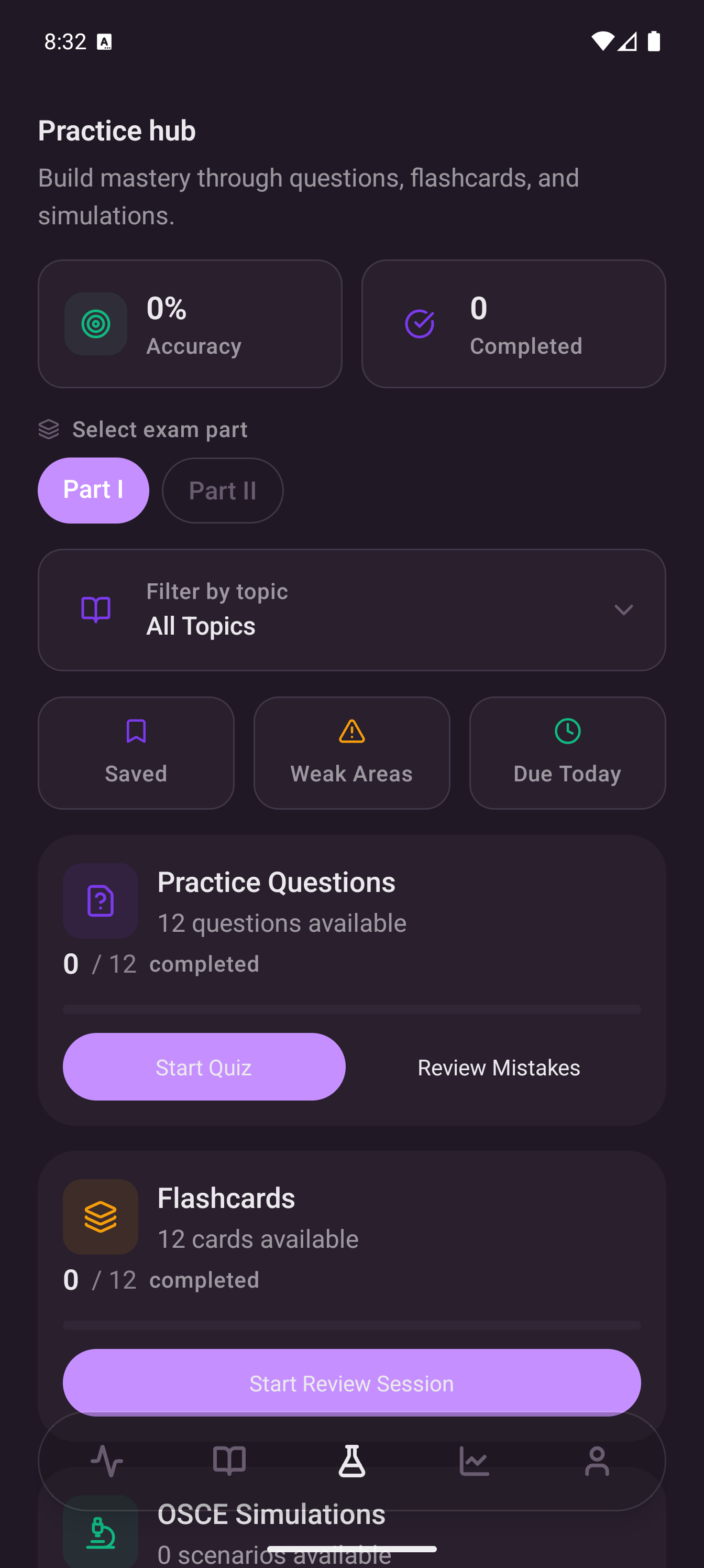
Smarter study, not just more content
AI already powers parts of Lorraine you interact with every day — question generation, clinical scenario design, explanation quality. What decides when you next see a given card is not a model, though: it is spaced repetition. Lorraine tracks your performance per topic and schedules reviews at the interval where they do the most for retention, with weighting shifting toward the areas you are getting wrong.
But this is only the beginning.
We are developing deeper AI-driven personalisation that goes beyond spaced repetition. Think of a system that understands not just what you got wrong, but why you got it wrong, and adapts your entire study plan accordingly.
What is coming next
We are actively building toward a set of AI-powered features that will fundamentally change how you interact with Lorraine.
Medical-specific chat. An in-app assistant trained on curated clinical content. Ask it to explain a concept, walk you through a differential, or clarify a guideline. It will respond with the depth and specificity that generic AI cannot match.
Voice-enabled learning. We are exploring voice interfaces that let you engage with study material hands-free. For doctors who spend their days in wards and theatres, this means learning that fits into moments that were previously lost.
AI-enhanced OSCE practice. Our OSCE simulations are already structured around real exam stations. We are working on bringing AI into this experience to deliver dynamic, responsive clinical scenarios with intelligent feedback that adapts to your performance in real time.
These are not distant ideas on a whiteboard. They are in active development.
The technology behind it
Lorraine draws on frontier large language models from leading AI labs alongside Lor-1, our own model adapted in-house for South African clinical practice. We do not rely on a single model or a single approach. Different tasks demand different strengths, from content generation and clinical scenario design to question calibration and quality assurance, and our systems are architected accordingly.
Three core techniques drive the quality of what you experience in the app:
Retrieval-augmented generation (RAG) grounds content in curated, specialist-reviewed clinical material. The AI does not improvise from general training data; it retrieves from a reviewed knowledge base aligned to CMSA syllabi and South African guidelines.
Fine-tuning adapts foundation models to the language, structure, and clinical expectations of South African medical education. This is how Lorraine speaks your clinical vocabulary and understands the nuances of local practice.
Specialist feedback loops close the gap between what a model produces and what an examiner would accept. Specialist review feeds back into content quality, difficulty calibration, and clinical accuracy, release over release.
We also use AI to generate illustrative medical imagery for teaching — ECGs, radiographs, histology slides, clinical photographs — using dedicated image generation models. Generated images are reviewed against real clinical references before they reach your screen, and they exist to teach a pattern rather than to stand in for a diagnostic study.
Built for what is ahead
The intersection of AI and medical education is still early. We believe the teams that build carefully, with real clinical input and local context, will define what this looks like for the next generation of doctors.
Lorraine is positioned to lead that conversation in South Africa and beyond.
We will share more as these features move closer to release. For now, know that the AI behind Lorraine is purpose-built, medically grounded, and designed to make you a better doctor.
Stay tuned. The best is still coming.
Written by
Lorraine Team
Editorial